Innovations in content creation and consumption have disrupted the business fundamentals for all forms of media. Now comes AI as the newest disruptor. Among all media genres transformed by AI, live sports stands apart as the one content type that will survive and maintain its appeal simply because the unpredictable thrill of human competition cannot be synthetically created — which explains Big Tech's interest in live sports.
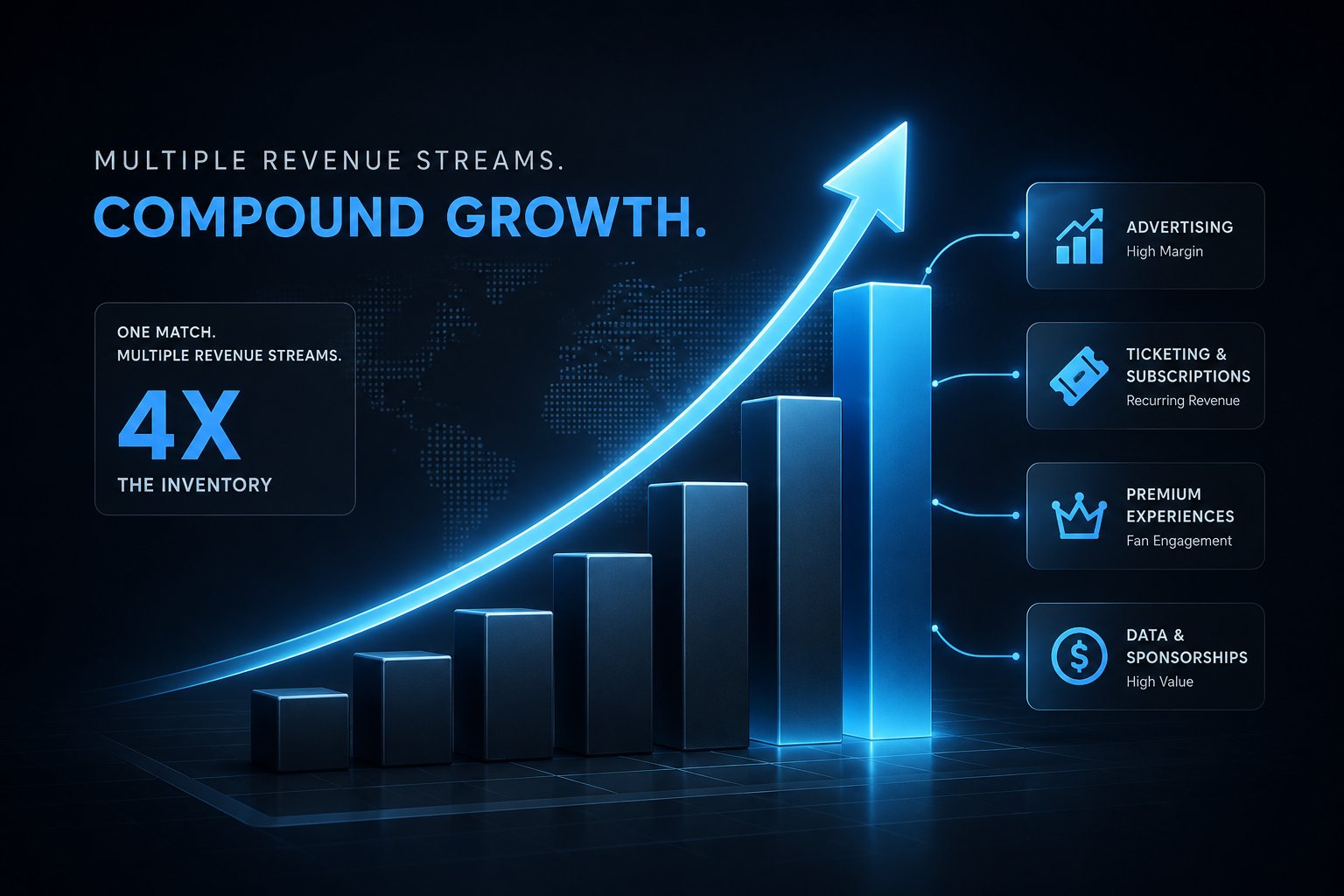
Why sports? Take a global, multi-generational audience of engaged fans, add AI powered by a rich source of personal and behavioral data to enhance the experience, and the result transforms sports into a consistent, reliable, recurring revenue stream delivered on demand. Applying AI algorithms to live sports presents a new opportunity for sports leagues and their advertisers, with the potential to redefine how sports sponsorship is defined. The UFC's SVP of Research and Development stated that AI fundamentally changes "the way you think about your fundamental (ad sales) structure," enabling regional brand targeting beyond just global contracts.
Born out of esports, 4D Sight's real-time native placement technology inserts virtual ads that are indistinguishable from physical signs in sports and 3D native game assets in esports, even in ultra fast-paced and complex games.
Beyond Cookies: Hyper-Personalization for Live Audiences
The application of AI to sports delivers a hyper-personalized experience that goes far beyond crude techniques such as cookie tracking, persona segmentation, and retargeting that treat audiences as categories, not individuals. AI enables hyper-personalization by processing large multi-modal data sets that bring deep contextual and behavioral understanding. The result is highly tailored content that is dynamically segmented and flows seamlessly into an uninterrupted viewing experience. Nobody likes an interruptive ad.
It accomplishes this in the cloud, needing only a video input with no special hardware or on-site staff required. The system's pay-as-you-go “self-serve” interface is designed so clients can manage operations directly without an initial investment.
4D Sight puts to rest the long-standing issue of glitchy virtual ads and can handle handheld camerawork in highly dynamic indoor and outdoor settings.
The End of Hardware-Based Virtual Advertising
Previous to AI, virtual advertising was delivered by an older generation of companies that sold telemetry hardware-based solutions that injected a logo into a game and superimposed it someplace inconspicuous. Physical constraints of hardware literally limit the sport and cause unnecessary safety risk and distraction to athletes.
After a decade of high costs, annoying glitches, and operational inefficiencies compounded by high hardware requirements, those legacy systems have been surpassed.
The UFC's Cohen noted that this technology “marks a very different approach from those used in sports with more static backdrops, such as soccer or baseball,” which typically use simpler overlay technologies over green-screen backdrops or LED signs. Those traditional “upstream” approaches rely on cameras locked on tripods with linked sensors, and largely don't have to deal with people moving into and around the screen.
AI as a Highlight-Aware Ad Engine
The addition of real-time AI to the action means the system can detect special situations that trigger the insertion of relevant advertising messages or sponsor logos unobtrusively onto the screen without interfering with players and action. For example, AI trained to detect a touchdown, home run, free throw, or penalty kick could trigger insertion of an advertiser's logo whenever one of those “highlights” occurs. How does that level of insight happen? AI is at its core an exercise in high-speed pattern recognition. The algorithm trained to identify faces, songs, or read x-rays can now, thanks to massive advances in processing power, also identify changes to the sound and images occurring live on screen.
AI can commercialize a touchdown several ways: it starts by predicting the touchdown will happen, and when it does, AI can measure fan sentiment from the level of cheering in the stadium and then make recommendations or notifications relevant to the moment. AI permits a fan to view the highlight from any point of view, including the players'. Action capture and transformation can be analyzed and played back instantaneously, opening new monetization and advertising insertion opportunities previously thought impossible. Real-time translation of play-by-play commentary into multiple languages opens up access to new regional markets. The contextual and behavioral understanding of the action, combined with real-time graphics and data, are powerful tools — especially for sports bettors.
Inside the UFC Deal
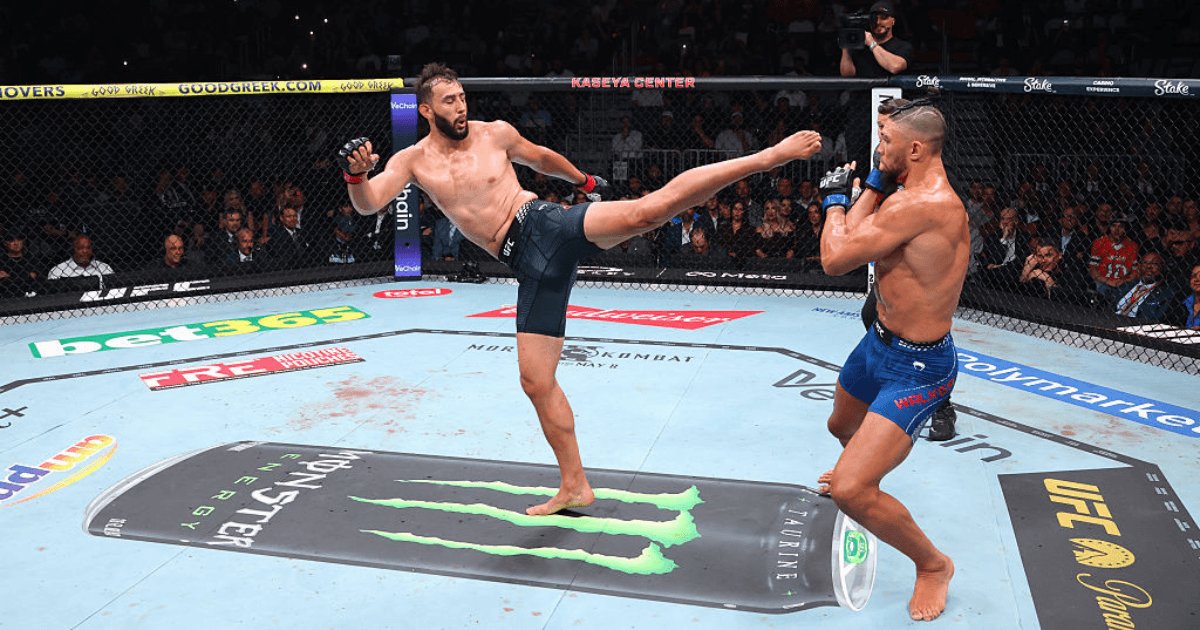
One of the first leagues to deploy 4D Sight's tech is the UFC, which signed a three-year deal with the company to swap its advertisers' logos onto the mat of the famous “octagon” ring.
4D's AI is able to understand and work with the UFC's live feed without needing to have any hardware or staff on site live at the event. The octagon ring doesn't accommodate green screens, and since 4D Sight can work with the handheld cameras used by the UFC, 4D keeps the ads shown on the octagon mat from glitching with an AI model intelligent enough to predict what it doesn't see and avoid the occlusion errors that have marred other attempts at video insertion into live action.
The technology dramatically expands the UFC's potential pool of sponsors seeking one of its most valuable types of ads into 170 territories, and it ensures the league's broadcasts will comply with any country's specific restrictions on advertising for sectors such as gambling, alcohol, or tobacco.
The harnessing of viewer behavior data in real time has opened up the potential pool of brands to more than 170 territories, expanding the UFC's inventory of viewer impressions to not only regional brands seeking specific audiences segmented by geography, but also to advertisers in regulated sectors who must abide by local regulations regarding alcohol, gambling, tobacco, pharmaceutical, financial services, and more. Because 4D Sight's model is predicated on the real-time processing of viewer data, the level of segmentation the UFC can offer potential advertisers goes far beyond the handful of top sponsorship opportunities that could only be considered by global brands in non-regulated sectors.
Rights, Streaming, and the New Sports Economy
AI's impact on live sports is beginning to attract attention, but first it must overcome a complex rights landscape predicated on old business models. From individual athletes and their agents, to their teams, the leagues they play in combined with local broadcasters and streaming services, traditional deal structures used to broadcast live sports will persist for a long time. Yet the landscape for sports media rights has already been transformed by streaming — which is shaking up cable as consumers cut the cord, and opening the door for Big Tech and its vaunted powers of transformation and disruption to shake things up.
For a taste of the turmoil, just check out the saga of Diamond Sports Group and the havoc and opportunities its bankruptcy is wreaking on old ways of delivering live sports. Teams caught in the turmoil are going directly to the fans, with both the Phoenix Suns and Utah Jazz introducing their own in-market streaming services — an indication the change is happening and opening the door for new technologies to further monetize the one thing that can't be faked and which doesn't “scale” according to Moore's Law: a sports fan's time and attention.