
AI Computer Vision in Broadcast: How Real-Time Object Tracking Powers Dynamic Ad Insertion
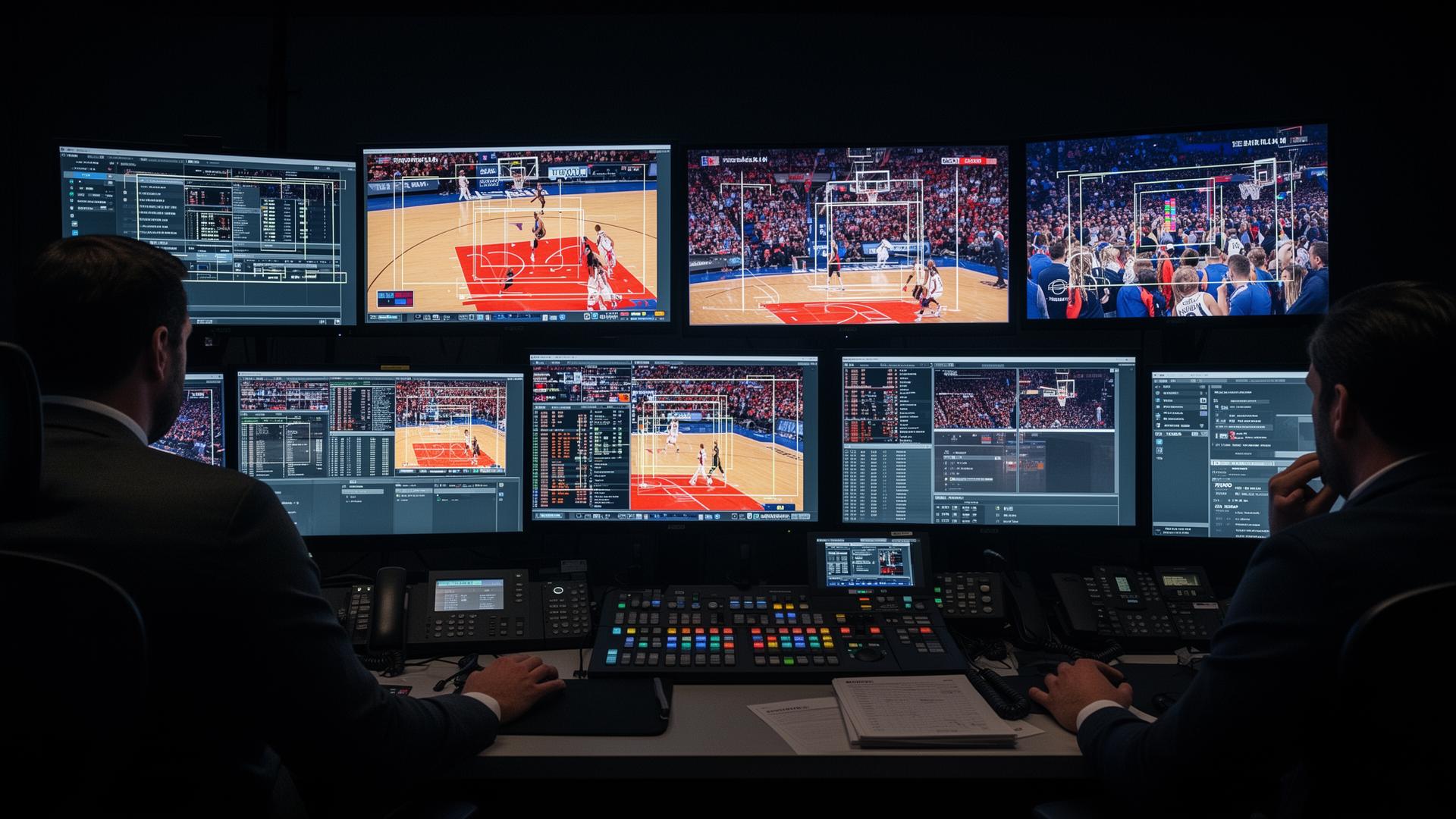
Why Live Broadcast Is the Hardest Computer-Vision Problem in AdTech
Inserting an ad into a still image is trivial. Inserting an ad into a live broadcast feed — at 50 or 60 fps, locked to camera motion, occluded by players, lit consistently with the venue, with sub-frame latency tolerance — is a problem most CV pipelines fail at. Get any one of those elements wrong and the artifact is immediately visible to the viewer, the broadcaster pulls the feed, and the sponsor walks away.
The Four-Stage Pipeline
1. Surface Detection
A purpose-trained model identifies the target surfaces — the canvas of an octagon, the perimeter LED, a courtside apron, an esports billboard — in every incoming frame. Modern pipelines fuse a detection backbone (YOLO-family or DETR-family) with task-specific heads for surface segmentation. Inference budget per frame is typically under 8 ms on a single GPU.
2. Pose & Camera Tracking
Once the surface is detected, the system computes its 3D pose relative to the broadcast camera using optical flow, feature tracking, and (when available) camera-telemetry feeds from PTZ rigs. This is what allows the inserted graphic to belong to the scene — tilting, panning, zooming with the live camera operator instead of sliding around like a 2D overlay.
3. Photoreal Compositing
The replacement is rendered with correct perspective, lighting, color grade, motion blur and depth-of-field to match the source feed. Player occlusion is handled with per-pixel masking — a player crossing in front of a virtual LED board must occlude it cleanly, frame-accurate. This is where most academic pipelines collapse and where production-grade systems separate themselves.
4. Decisioning & Telemetry
In parallel, a region-aware decisioning engine decides which sponsor to render per feed, and a telemetry layer reports exposure, viewability and brand-safety metrics back to buyers in near real-time.
The Model Architecture Trade-Offs
- Latency vs. accuracy — broadcast is unforgiving. A 30 ms hiccup that would be invisible in offline analytics produces a visible smear on-air.
- Generalization vs. specialization — one model trained on "all sports" underperforms a model fine-tuned per sport, per venue, per camera position.
- Edge vs. cloud rendering — for live broadcast we run the entire pipeline at the production truck or playout edge. Round-tripping pixels through the cloud is incompatible with live timing.
Why This Is Different From DAI for Streaming
Dynamic Ad Insertion (DAI) for OTT inserts an entire ad break per user. Frame-aware virtual signage inserts a sponsor into the content — no break, no interruption. They are complementary, not competing, technologies. DAI sells the pause. Virtual signage sells the play.
The technical bar for broadcast-quality virtual signage is roughly 100× harder than for digital out-of-home ad insertion. Most teams that try to build it underestimate the compositing problem by an order of magnitude.
What This Means for Buyers
For brand and agency buyers, the practical takeaway is that the technology is mature enough to plan media against — but it is not commoditized. Output quality varies dramatically between providers. Ask to see live multi-camera output, not just rendered demos, before committing budget. Talk to our team for a technical briefing.