
Region-Specific Sponsorships: How Geo-Targeted Virtual Signage Doubles Sponsor Revenue
The Old Model: One Board, One Sponsor, One World
For thirty years, the math on a stadium LED board was simple. A sponsor paid for the board. That sponsor was visible on every broadcast feed, in every country, for the full duration of the deal. Markets where the brand had no business paid for markets where it did. Markets where the brand wasn't even legally allowed to advertise quietly accepted the spillover.
That model is now structurally obsolete.
The New Model: One Surface, N Sponsors, Per Region
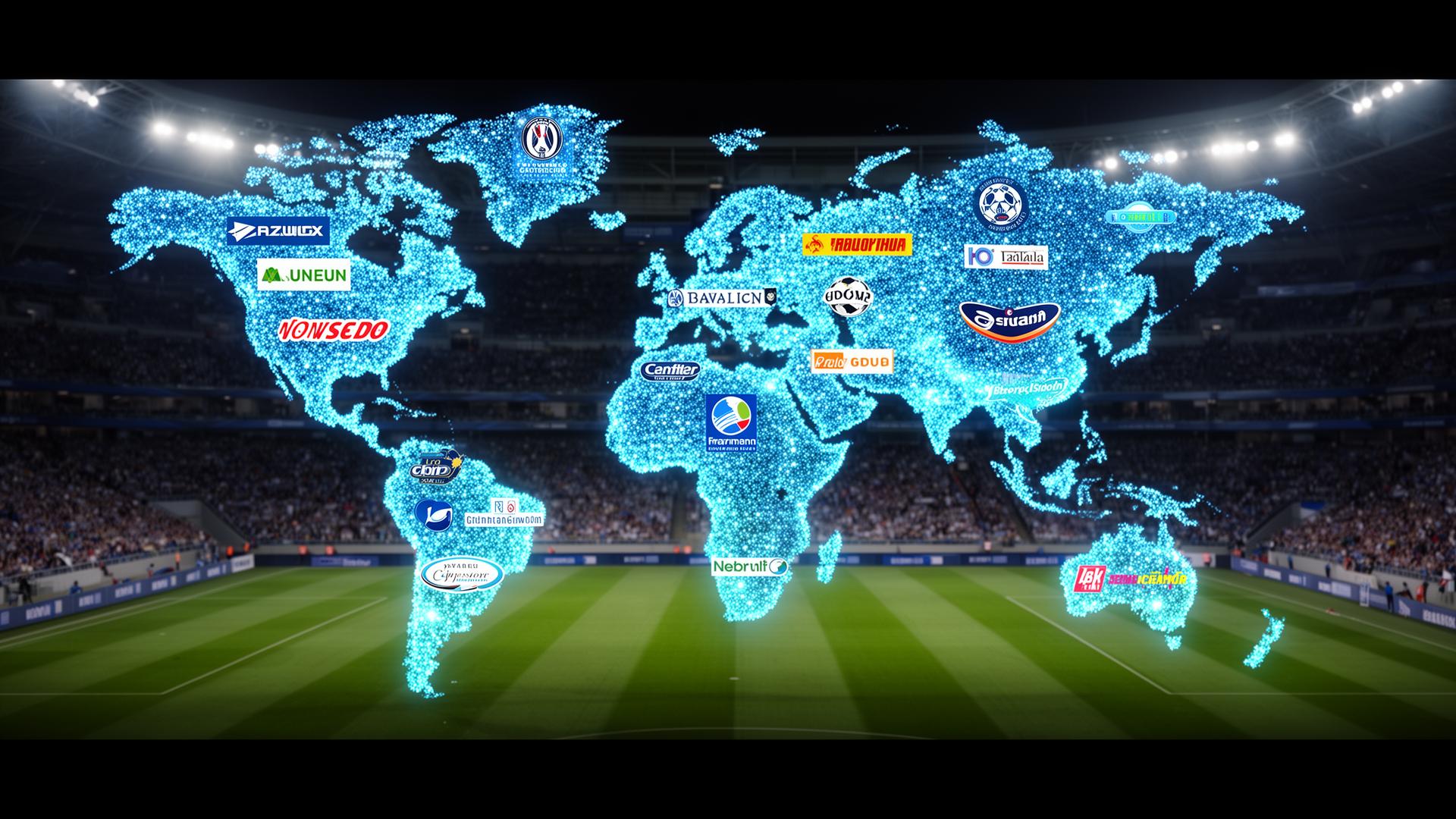
With frame-aware virtual signage, the same physical board becomes a separately-sellable surface in every territory the broadcast reaches. A league distributed into 170 markets now has 170 versions of the same inventory — each priced to local demand, each compliant with local rules, each delivering only to viewers the brand actually wants.
The Revenue Math
Take a Tier-1 football match watched live in 80 territories. Under the legacy model the perimeter sells for one global rate — typically optimized for a Top-5 market. Under the virtual model:
- The U.S. feed carries a sportsbook brand at U.S. CPM rates
- The Saudi feed carries a regional bank — no alcohol, no betting
- The German feed carries a Bundesliga-relevant automotive brand
- The Brazilian feed carries a fintech onboarding a new market
The result, in deployments we've seen across 2024–2025: 2.1× to 2.7× total revenue per perimeter rotation, with the same physical asset.
Why This Works at the Pixel Layer (and Not With Physical LEDs)
Physical LED rotations exist, but they share one fundamental limitation: the rotation is the same for every viewer in the world. A 30-second cycle of Brand A → Brand B → Brand C is identical in Tokyo and São Paulo. Virtual rendering removes that constraint entirely — the feed itself is what changes.
The compliance friction that used to lose us six-figure deals — "we can't be on that perimeter because it shows in markets where we're not licensed" — disappears entirely. We just render the brand into the markets where it's licensed.
The Compliance Unlock
Three of the highest-CPM advertiser categories — sportsbooks, alcohol, crypto — are restricted in dozens of markets. Under the global-board model, a rights-holder had to choose: lose the category entirely, or accept the legal and PR risk. Under the virtual model, the buyer pays full rate for the territories where they're licensed, and the rights-holder fills the other territories with non-restricted demand. The category becomes 100% sellable.
What This Means for Sponsorship Decks in 2026
Rights-holders rebuilding their commercial decks should:
- Stop pricing perimeter inventory at a global flat rate
- Build a per-market rate card by feed
- Sell restricted-category bundles by territory
- Layer in moment-based premiums (final 5 minutes, penalty kick, walk-off)
- Package virtual surfaces with downstream highlight rights — the same brand persists into the clip
Where to Start
The path is well-trodden. Most rights-holders go from contract to live region-targeted virtual surfaces in under 10 weeks. Talk to us about modelling the per-market revenue uplift for your sport.