
In-Game Advertising for Esports: A Publisher's Playbook for Twitch & YouTube Monetization
The Monetization Gap in Esports
Esports drew over 540 million viewers globally in 2025 and roughly 11 billion hours of streamed gameplay on Twitch and YouTube. Yet sponsorship and ad revenue per viewer remains a fraction of traditional sports — not because brands don't want the audience, but because the inventory is genuinely hard to deliver.
Pre-rolls interrupt the action. Banner overlays cheapen the broadcast. SDK-based in-game ads require publisher engineering work, a new client build, certification, and ongoing maintenance. The category has been waiting for a delivery model that respects both the game and the audience.
The Stream-Layer Insertion Model
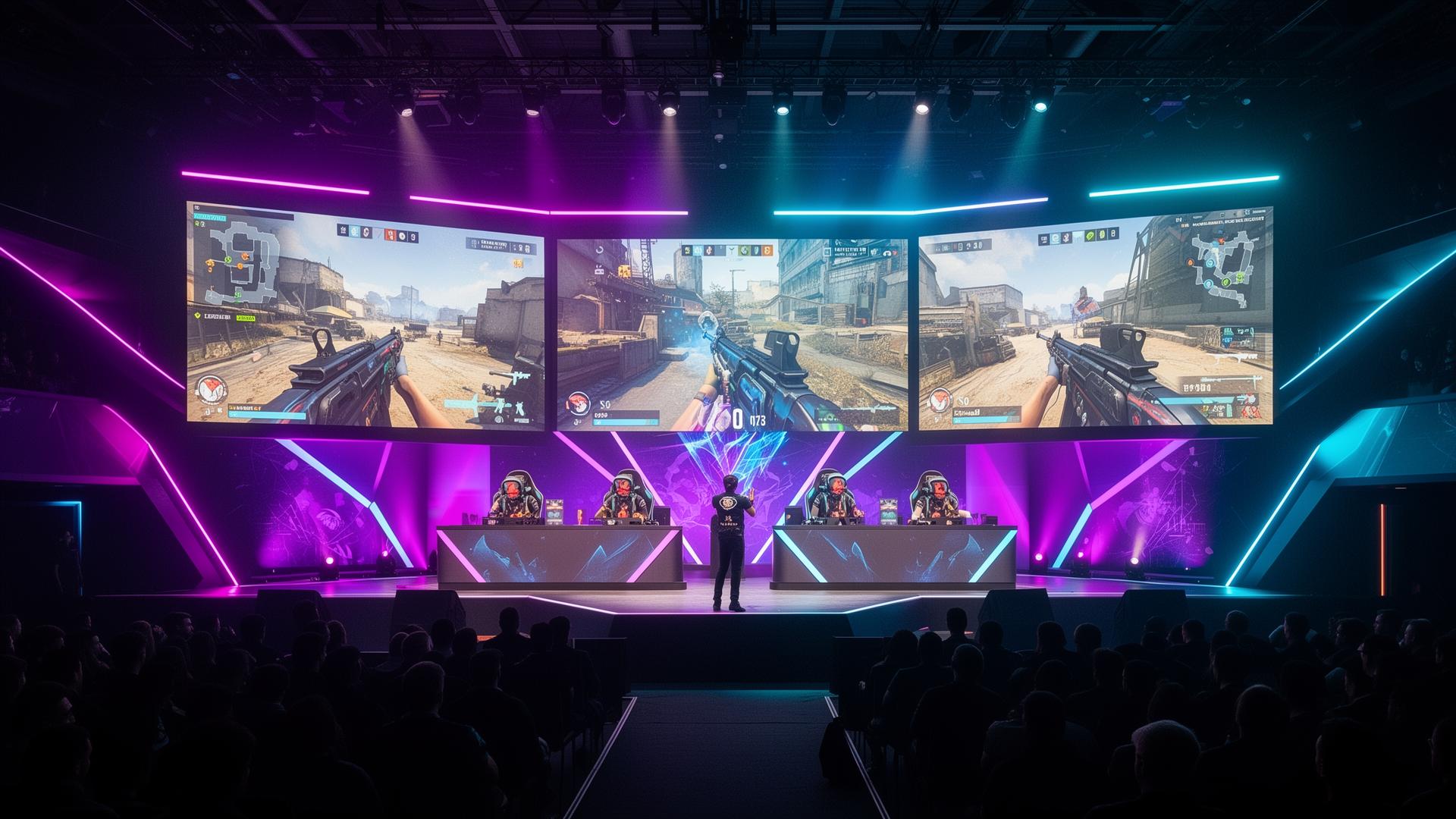
Frame-aware insertion at the stream layer solves this. The game runs untouched. The publisher ships nothing. The brand is rendered into the broadcast feed — on existing surfaces inside the game world (billboards, walls, map skyboxes, vehicle wraps) — using computer vision and photoreal rendering on the outbound stream.
- No SDK. No publisher code change.
- No new build. No certification cycle.
- No engine modification. Works on Unreal, Unity, Source, proprietary engines alike.
- No player impact. The competitive integrity of the match is untouched — players see the original game.
What Brands Buy
The inventory that performs best on streamed gameplay:
- In-world billboards and signage on map locations the camera revisits naturally
- Skybox and arena dressing in MOBA and esports-arena maps
- Vehicle and weapon-skin treatments visible during pro replays and POV cams
- Loading-screen and lobby surfaces for guaranteed eyeballs at session start
Why This Outperforms Pre-Roll
Native in-world inventory delivers 3–6× the unaided brand recall of an equivalent-CPM pre-roll, because the viewer never tunes out — there's no interruption to skip. The brand becomes part of the world, not a tax on watching it.
The Compliance Story for Esports
Esports demographics skew young, and many publishers have long avoided sportsbook, alcohol and crypto categories because they couldn't guarantee region-correct delivery. Stream-layer insertion fixes this: the same broadcast renders different sponsors per market, so restricted categories only appear in territories where they're legal and to audiences age-gated by the streaming platform.
For the first time the esports broadcast can sell the same restricted-category inventory that linear sports has been selling for a decade — without sacrificing the integrity of the game or the publisher's relationship with players.
A 90-Day Rollout for a Publisher
The typical integration:
- Weeks 1–3: Surface mapping — which in-world locations are camera-relevant and brand-safe.
- Weeks 4–6: Render pipeline tuned to the title's lighting, color grade and motion characteristics.
- Weeks 7–9: Test broadcast on a single tournament feed.
- Weeks 10–12: Multi-region commercial rollout.
By month four the publisher has a new high-margin revenue line with effectively zero engineering overhead. Talk to our gaming team about a pilot for your title.