
Beyond the Jumbotron: Why Modern Venues Require Real-Time Intelligence
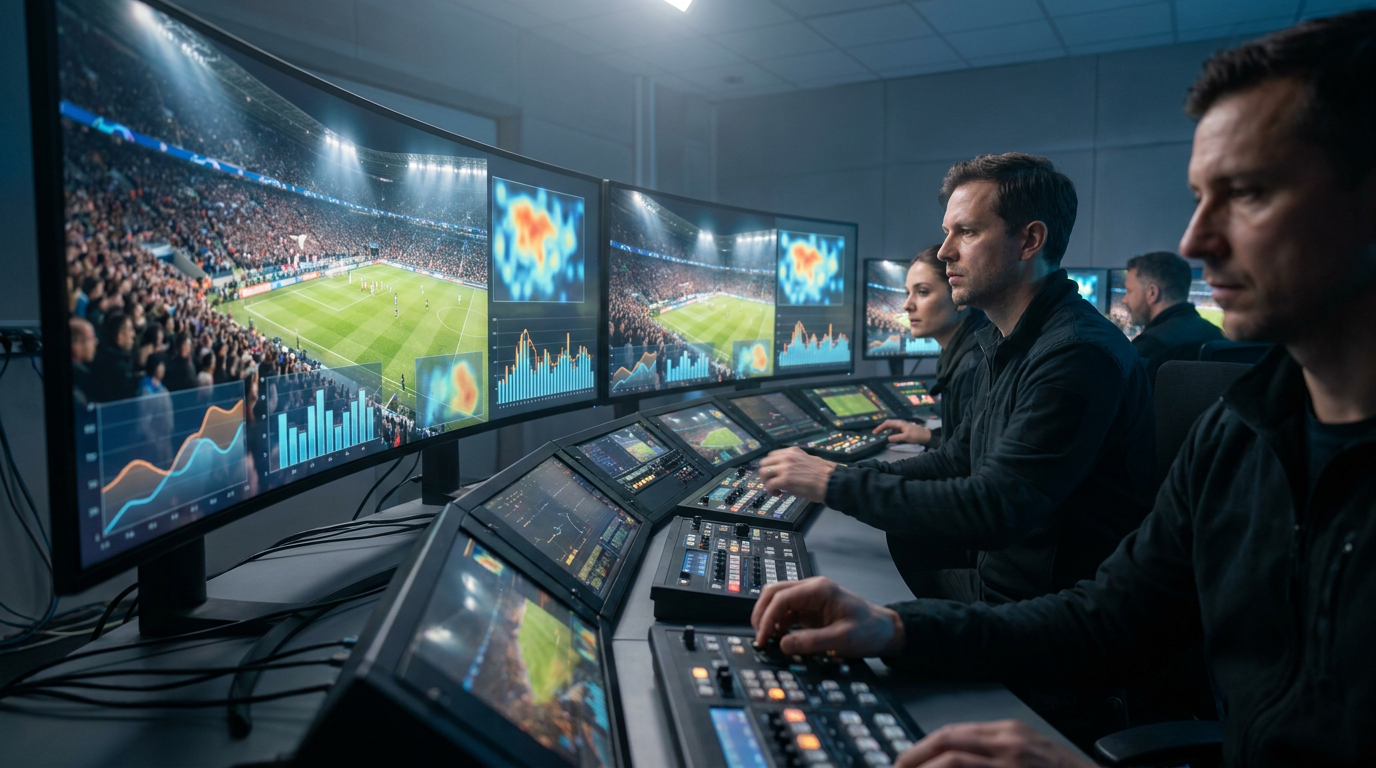
The modern sports stadium is a marvel of architecture and engineering, but its true value extends far beyond its physical footprint. Today, the most successful venues operate as dynamic, high-stakes media environments where every moment holds potential value. From the concourse to the luxury suites, every square foot is an opportunity to engage fans, delight sponsors, and create compelling broadcast narratives. However, capitalizing on these moments requires a level of insight that traditional operational tools cannot provide. It demands a sophisticated, live understanding of the entire venue ecosystem. This is the domain of real-time venue intelligence, a technological leap that transforms physical spaces into data-rich, monetizable platforms.
The Data Lag of Traditional Venue Management
For decades, venue management has relied on a patchwork of disconnected data sources. Ticketing systems, concession sales reports, and post-event surveys provide a historical snapshot of what happened, but they offer little insight into the *why* or the *what now*. This reactive approach leaves significant value on the table. By the time an analyst discovers that a particular concession stand was underutilized or a sponsor's digital sign was poorly positioned, the event is over, and the opportunity is lost.
This data lag creates several critical business challenges:
- Siloed Information: Data from ticketing, retail, and security often live in separate systems, making it impossible to get a unified view of the fan journey or venue performance.
- Delayed Insights: Post-event analysis is useful for long-term planning but completely ineffective for making in-the-moment adjustments that could immediately impact revenue or fan experience.
- Missed Context: A report might show a spike in social media mentions, but it won't reveal the specific in-venue stimulus that caused it. Was it a spectacular play, a crowd-led chant, or a successful sponsor activation? Without real-time context, it's all guesswork.
Ultimately, this reliance on historical data means venues are constantly looking in the rearview mirror, managing the past instead of capitalizing on the present.
Unlocking Sponsorship and Commercial Value in Real Time
The single greatest advantage of real-time venue intelligence is its ability to directly influence and measure commercial activities as they happen. For sponsors, who invest heavily to connect with passionate fan bases, this intelligence is a game-changer. Instead of relying on static signage and estimated impressions, venues can now offer dynamic, data-driven sponsorship activations.
Imagine a scenario where AI-powered cameras detect a surge of fan attention toward a specific area of the field. Instantly, the system can trigger a relevant sponsor's logo on the nearest digital ribbon boards, ensuring the brand is presented at a moment of peak engagement. Similarly, crowd flow and attention data can be used to dynamically adjust content on concourse displays, directing fans to merchandise stands with the shortest lines or promoting a concession special in a high-traffic zone. This isn't just about optimizing ad placement; it's about integrating partners into the live event fabric in a way that feels organic and impactful, while also providing them with verifiable proof of performance.
Enhancing the Broadcast by Connecting In-Venue and At-Home Experiences
A venue's audience isn't confined to its seats. Millions of fans experience the event through a broadcast, and real-time venue intelligence provides a powerful bridge between these two worlds. Production teams are always searching for compelling narratives and authentic moments that capture the atmosphere of the game. Venue intelligence can be their eyes and ears on the ground.
By analyzing crowd density, movement, and enthusiasm, the system can automatically identify the most energetic fan sections and tip off the broadcast director. It can detect the start of a stadium-wide wave or a coordinated chant, providing the production team with the cue to capture a moment of collective celebration. This data feed enriches the broadcast, making viewers at home feel more connected to the live experience. It moves beyond simple game coverage to true event storytelling, creating a more immersive and engaging product for rights holders and their media partners.
From Crowd Control to Experience Optimization
Operational efficiency has traditionally focused on safety and logistics—managing entry, directing traffic, and ensuring public order. While critically important, real-time venue intelligence reframes these operational tasks through the lens of fan experience and commercial opportunity. The same data used to prevent bottlenecks can also be used to enhance the fan journey.
By understanding pedestrian flow in real time, venues can proactively open new concession lines, deploy staff to assist with wayfinding, or even update digital maps with the most efficient routes. This not only creates a smoother, more enjoyable experience for attendees but also maximizes their time spent engaging with revenue-generating activities rather than waiting in line. A positive experience from arrival to departure leaves a lasting impression, encouraging repeat attendance and fostering greater loyalty—foundations of long-term venue success.
Where 4D Sight Fits
Transitioning from reactive management to proactive, data-driven optimization is the core challenge that today's leading venues face. Traditional camera systems see everything but understand nothing. 4D Sight provides the crucial intelligence layer that transforms standard video feeds into a source of actionable, real-time venue intelligence. Our platform utilizes advanced AI to analyze what's happening across the entire venue, from individual fan attention to large-scale crowd dynamics.
Our proprietary AI Director technology automates the detection and analysis of key events, brand exposures, and audience behavior. It moves beyond simple object counting to provide a deep, contextual understanding of the live environment. This is the solution that empowers venue operators, marketers, and broadcast producers to make smarter decisions in the moments that matter most. By leveraging your existing camera infrastructure, 4D Sight unlocks a new dimension of data, enabling you to quantify brand value, optimize operations, and create more engaging experiences for everyone.
The future of venue management is intelligent. It's about seeing the entire picture, understanding every interaction, and having the data to act decisively in real time. For stadiums and arenas ready to evolve from mere structures into powerful media hubs, embracing this new paradigm is not just an option—it's essential for staying ahead.
Frequently Asked Questions
What is real-time venue intelligence?
Real-time venue intelligence is the use of AI and computer vision technology to analyze live video feeds from a stadium or arena. It provides immediate, actionable data on crowd behavior, fan engagement, sponsor visibility, and operational flow, allowing for in-the-moment decision-making.
How does venue intelligence differ from standard security monitoring?
While both use cameras, security monitoring is typically for passive observation or forensic review. Venue intelligence actively analyzes the video content to extract business insights, such as which sponsor logos are getting the most attention, where crowd bottlenecks are forming, or which fan sections are most engaged.
What kind of data can real-time venue intelligence provide?
The system can provide a wide range of data, including audience attention measurement, brand exposure duration and visibility, crowd density and flow patterns, fan sentiment analysis (based on aggregate behavior), and identification of key non-game moments like crowd celebrations.
Do I need to install new cameras to use this technology?
Not necessarily. Advanced platforms like 4D Sight are designed to be hardware-agnostic, meaning they can often integrate with and analyze feeds from a venue's existing camera infrastructure, reducing the initial investment and deployment time.
How does this technology benefit our venue's sponsors?
It transforms sponsorship from an estimated-value proposition to a data-backed investment. Sponsors receive verifiable metrics on their brand's visibility and audience engagement, justifying their spend. It also allows for dynamic ad activation at moments of peak fan attention, maximizing impact.
See how 4D Sight turns live video into real-time sports intelligence →