
Context Is Everything: The Science of AI Key Moment Detection in Sports
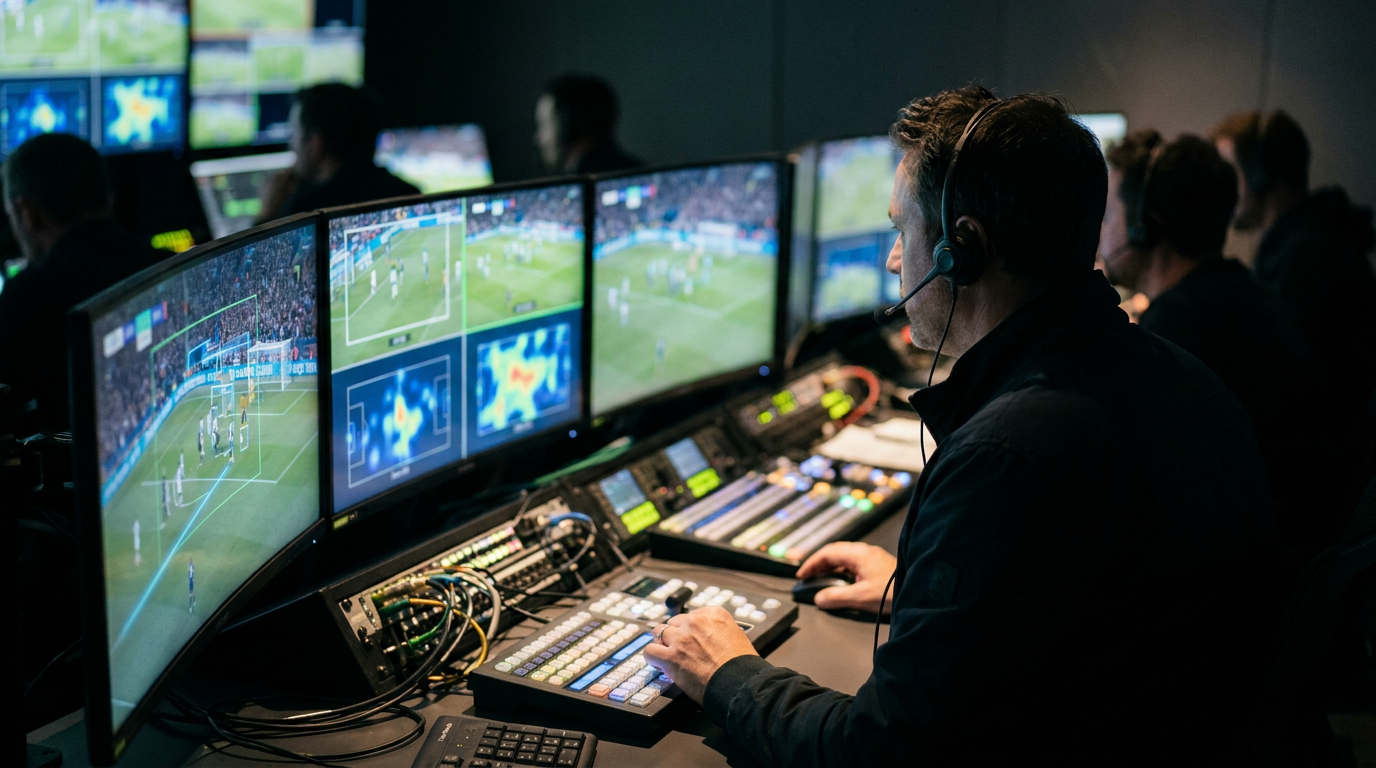
A ninety-minute soccer match contains over 5,400 seconds of continuous action. A professional basketball game generates thousands of distinct events. Yet, for fans and broadcasters, only a handful of these moments truly define the outcome and narrative of the contest. The challenge has always been to identify these pivotal moments instantly, not just as isolated events but as the climax of developing storylines. Historically, this required a team of experienced producers with an intuitive feel for the game. Today, AI key moment detection in sports is transforming this art into a science.
This technology moves beyond simple event logging—like noting a goal or a basket—to achieve genuine contextual understanding. It deciphers the 'why' behind the 'what,' identifying not just the action but its significance, the emotional reactions it provokes, and its place in the overarching story of the match. For rights holders, leagues, and broadcasters, this capability unlocks unprecedented efficiency and creates new avenues for fan engagement.
Deconstructing the Anatomy of a 'Key Moment'
What elevates a simple action to a 'key moment'? The answer lies in context. A goal scored in the 89th minute to tie a championship game carries infinitely more narrative weight than the fifth goal in a 5-0 blowout. A rookie making a crucial defensive stop against a veteran superstar is more than just a statistic; it's a story. Artificial intelligence must be trained to recognize these multifaceted components:
- The Action: The foundational event itself, such as a goal, a dunk, a tackle, or a home run. This is the easiest layer to detect using basic action recognition models.
- The Game State: The score, the time remaining, the down and distance, the possession arrow. This data, often available from scoreboards or data feeds, provides critical context for the action's importance.
- The Human Reaction: The unscripted drama is often the most compelling part. This includes players' celebrations or frustrations, the coach's reaction on the sideline, and the collective energy of the crowd. Advanced AI can analyze body language and even facial expressions to quantify this emotional response.
- The Narrative Significance: This is the highest level of understanding, where the AI synthesizes all other layers. It's recognizing the 'first-ever,' the 'record-breaking,' the 'comeback-sealing' play that will be remembered long after the final whistle.
How AI Learns to Understand the Game
AI key moment detection is not a single technology but a sophisticated pipeline of interconnected systems working in concert. At its core, computer vision provides the eyes, but layers of machine learning models provide the brain. The process involves training AI on vast archives of game footage where key moments have already been identified by human experts. Over time, the models learn to associate specific visual, auditory, and data-based patterns with narrative significance.
The Multi-Modal Data Fusion Approach
Success depends on fusing multiple data streams in real time. This includes:
- Video Feeds: The primary source, providing raw visual information about player positions, actions, and reactions. AI analyzes pixels to identify objects and track movement.
- Audio Feeds: Crowd noise, commentator excitement, and on-field sounds offer powerful contextual clues. A sudden roar from the crowd is a strong indicator of a significant event.
- Game Data APIs: Structured data from official sources provides the undeniable facts of the game state—score, time, and statistics—that AI uses to ground its analysis.
- On-Screen Graphics (OSG): AI can read graphics on the broadcast feed itself, like the score bug or pop-up stats, to cross-reference and validate information.
By combining these inputs, the AI builds a holistic, three-dimensional understanding of the game, much like an expert human producer would, but at a speed and scale that is impossible to replicate manually.
The Real-Time Imperative: From Detection to Production
For key moment detection to be valuable in a live broadcast environment, it must operate with near-zero latency. Identifying a crucial play thirty seconds after it happens is too late for a live director looking to cut to the perfect instant replay. This is the ultimate technical challenge: processing immense streams of high-resolution video and data through complex neural networks in milliseconds.
Achieving this requires highly optimized algorithms and powerful hardware, often deployed at the edge—right in the stadium or broadcast truck. This ensures that the insights generated by the AI are available instantly to the production team, enabling them to enhance the live broadcast with immediate, perfectly timed replays and highlight packages that capture the peak of the action and emotion.
Where 4D Sight Fits: Orchestrating the Live Narrative
Simply identifying key moments is only half the battle; the true value is unlocked when that intelligence is used to automate and enhance the production workflow. This is precisely the challenge 4D Sight was built to address. Our platform serves as the central nervous system for live sports video, ingesting multiple camera feeds and applying advanced AI to understand the game in real time.
Our flagship product, AI Director, is the perfect solution that leverages this deep contextual understanding. By automatically detecting key moments—complete with their associated player actions and emotional peaks—AI Director can autonomously switch camera angles to frame the most compelling narrative. It intelligently produces a broadcast-quality feed by anticipating the story's direction, ensuring that the most dramatic saves, pivotal goals, and celebratory moments are always at the center of the frame. This automates the storytelling process, allowing broadcasters to produce high-quality, engaging content for more games at a fraction of the cost.
Augmenting, Not Replacing, Human Storytellers
The goal of AI key moment detection in sports is not to remove human creativity from the broadcast but to empower it. By automating the tedious, repetitive tasks of logging plays and searching for replays, AI frees up producers and directors to focus on higher-level storytelling. They can now orchestrate more complex narratives, bring in unique expert commentary, and create a richer viewing experience for the fan.
As this technology continues to evolve, it will become an indispensable tool for any sports organization looking to maximize the value of its live video content. From creating automated, personalized highlight reels for every fan to enabling new interactive experiences, the ability to understand the context of every moment is the future of sports media. It’s a future where every significant play is captured, understood, and delivered with maximum impact.
Frequently Asked Questions
What is AI key moment detection in sports?
AI key moment detection is a process where artificial intelligence analyzes live video, audio, and data feeds from a sports event to automatically identify and flag pivotal moments. This goes beyond simple actions, incorporating game context and player emotion to determine a moment's narrative significance.
How does this AI technology differ from manual highlight clipping?
Manual clipping relies on human operators to watch the game and decide what's important. AI automates this process at an unparalleled speed and scale, analyzing multiple feeds simultaneously and delivering an objective, data-driven selection of key moments in real time, seconds after they occur.
Does this AI replace the human broadcast director?
No, the technology is designed to augment, not replace, human expertise. It acts as an incredibly efficient assistant, automating repetitive tasks like logging and finding replays. This frees up directors and producers to focus on more creative, higher-level aspects of storytelling and broadcast production.
What sports can this AI analyze?
The underlying AI models are adaptable to virtually any sport. While the specific actions to be recognized differ—a three-point shot in basketball versus a touchdown in American football—the core principles of tracking objects, recognizing actions, and analyzing context apply broadly across the sports landscape.
How accurate is AI at identifying important moments?
Modern AI systems, trained on vast datasets of historical games, achieve a very high degree of accuracy. Through continuous machine learning, the models are constantly refined to better understand the nuances of each sport, improving their ability to pinpoint the moments that matter most to fans and storytellers.
See how 4D Sight turns live video into real-time sports intelligence →